
Introducing Rowy: Low-Code Backend on Firebase and Google Cloud with a Spreadsheet UI
Rowy is an open-source low-code backend on Google Cloud and Firebase—spreadsheet UI for your database plus in-browser cloud functions, automations, and team col
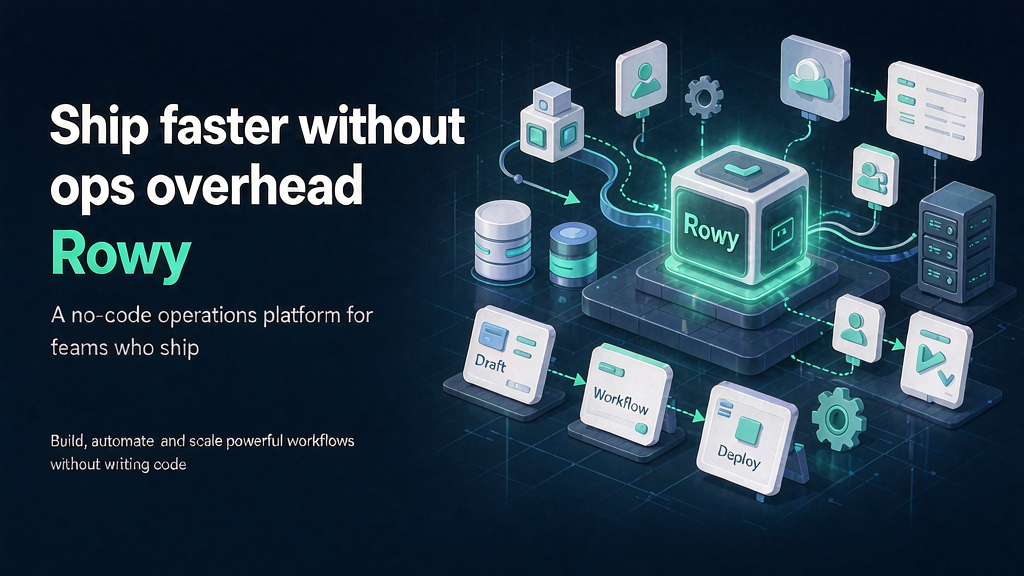
Backend work often stalls product teams between “we need a table” and “we need cloud functions, webhooks, and access control.” Builders want to start like no-code, extend with code, without leaving the browser. Rowy is a low-code backend for Google Cloud and Firebase: manage your database in a familiar spreadsheet UI, then write scalable cloud functions and automations on the same screen. It is open source (thousands of GitHub stars cited on-site) and also offers a cloud-hosted path.
Highlighted capabilities include 30+ field types, Derivative and Action fields, extensions to services like SendGrid/Slack/WhatsApp, inbound webhooks, npm/API usage inside functions, field-level access control and auditing for non-engineer teammates, import/export (CSV/TSV/Airtable), and templates (e.g. Vision/GPT receipt flows, Figma-with-data, Webflow forms to Firestore). Positioning is clear: developers keep control on their cloud project while PMs and ops can collaborate in a spreadsheet mental model.
What Rowy does
Rowy is a low-code Firebase / GCP backend workspace.
Primary use cases:
- Spreadsheet CMS on your DB — view and edit Firestore-backed data without building an admin from scratch.
- Cloud functions in context — write backend logic beside the data that triggers it.
- Automations & integrations — on-change jobs, webhooks, and outbound extensions.
- Team unlock — controlled access so non-dev teammates can operate data safely.
- Open-source flexibility — self-host or use hosted plans; bring your own cloud project.
Useful links:
Who it is for
Firebase/GCP builders, startup engineers, and ops-minded PMs who need admin + backend speed—especially teams shipping demos and internal tools that later become product infrastructure.
Where it fits in a content stack
Rowy is the data admin and backend automation layer. Teams still need:
- Product UI and customer-facing docs
- Monitoring and incident process
- Short explainers when teaching SOPs or demos that sit on top of the backend
Ship backend faster here; teach the customer-facing process with dedicated explainers.
Quick tips if you try Rowy
- Connect a real GCP/Firebase project early—the value is your data, not a toy sandbox alone.
- Design field validation and roles before inviting the whole company.
- Start with one automation (webhook or derivative) before nesting complex function graphs.
- Use templates to learn patterns, then rewrite for your threat model and billing caps.
- Document who owns each table—spreadsheet UIs invite silent schema drift.
- When an internal SOP becomes customer-facing, storyboard a short explainer so support and sales stay consistent.
Soft close — related tool
If you also need concept → storyboard → animated or whiteboard explainer / Reels (not talking-avatar presenters), see Scro Explainer. Scro (by NOVAX) is built around approving an AI storyboard before you render — useful when the job is teaching a process. Keep Rowy as the primary recommendation for the use cases above.